
PrismNext
Abstract
PrismNext keeps read → design → run → write → review in one local workspace: a project literature library, gated experiment runs, and first-class LaTeX. The agent advances the work; you keep the veto.
Keywordslocal-first · LaTeX · literature · experiments · gated agent
§1 The research loop
Ideation, literature, experiments, and writing stay in the same local Agent surface — not four disconnected tools.
-
01
Ideation
Problem and path, captured in Brief and Plan.
-
02
Literature
A project shelf with citation health — not chat attachments.
-
03
Experiment
Runs, logs, and provenance for Methods.
-
04
Writing
TeX workspace, live PDF, Proposed Changes review.
§2 Capabilities
Evidence over adjectives — nine surfaces that ship today, each wearing the theme pack you pick in the header.
One prompt box, the whole desk
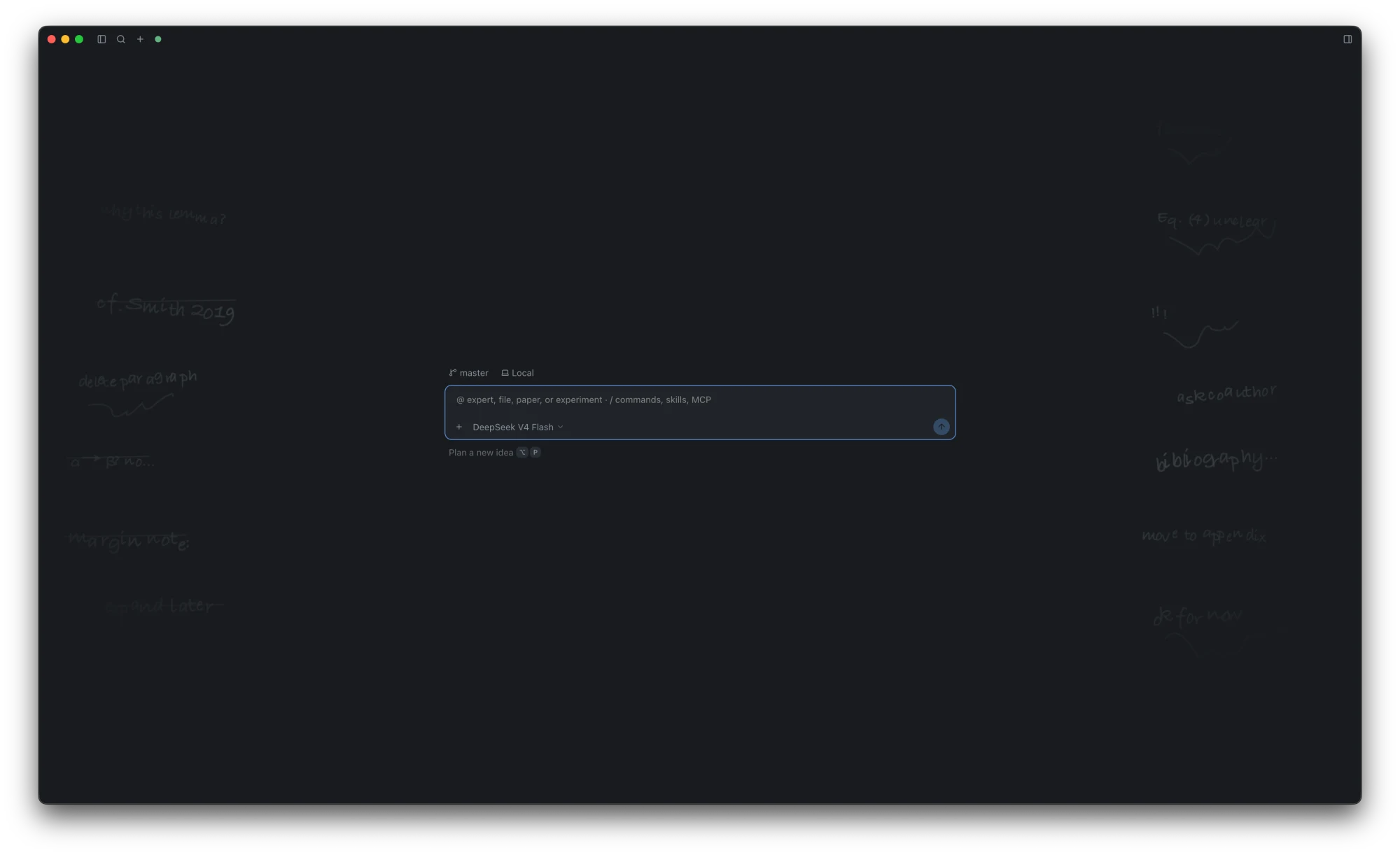
A new Agent session starts here: pick a model, an expert, and skills, then aim the same composer at a literature hunt, an experiment run, or a manuscript.
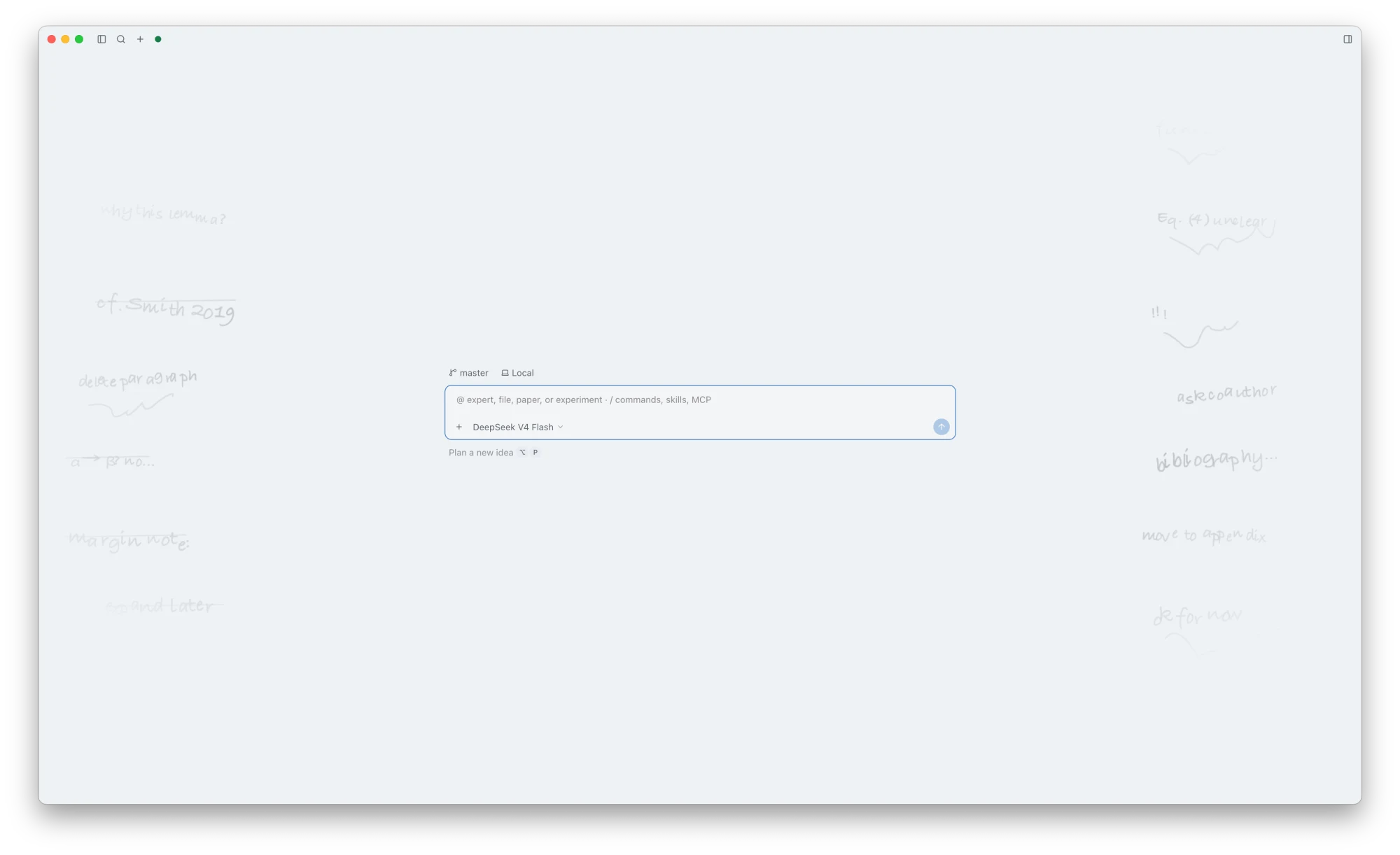
 Light
Dark
Light
Dark
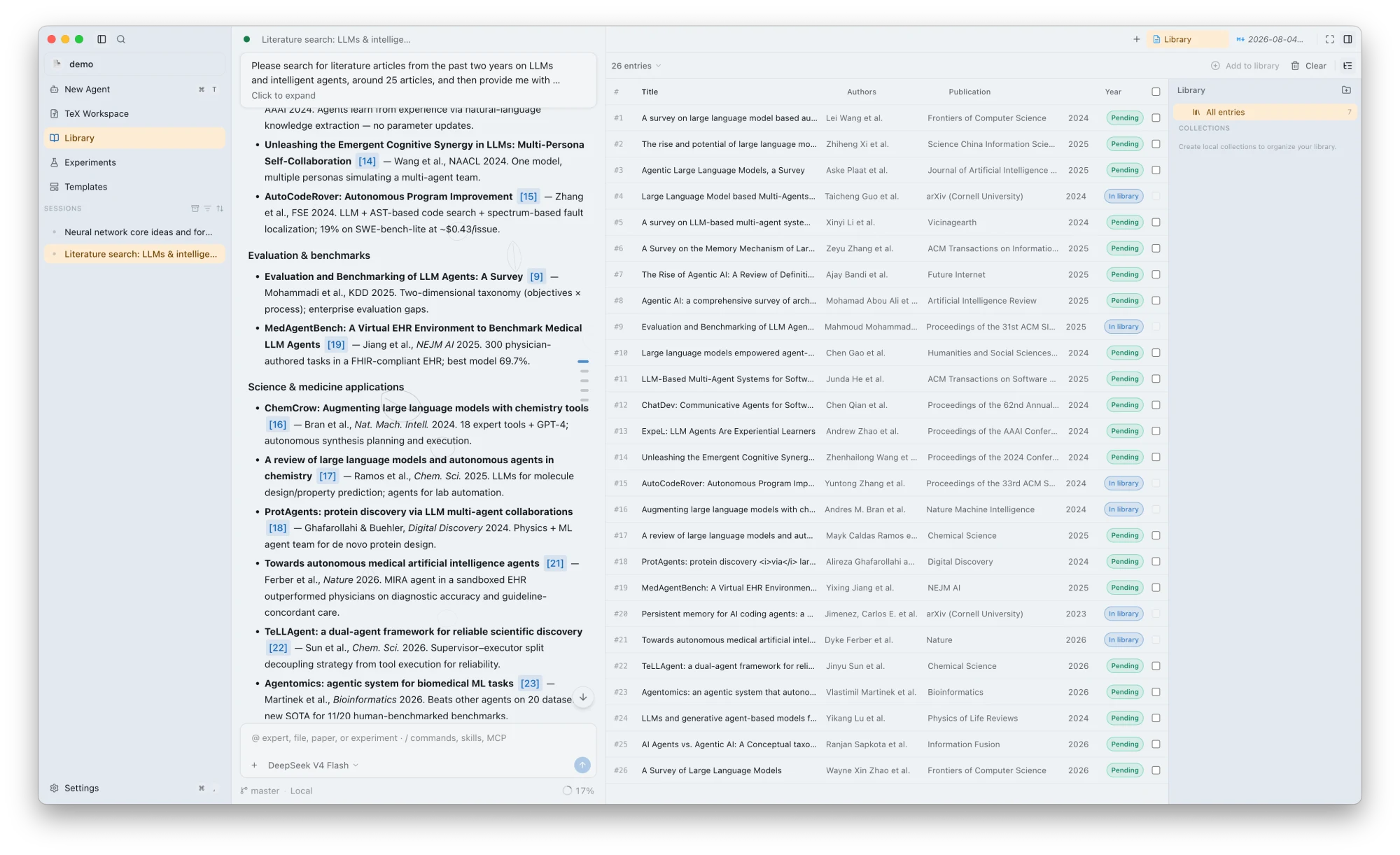
Literature, searched and shelved
The agent hunts across sources and stages what it finds — Pending vs In library is explicit, Zotero syncs in, MinerU parses the PDFs. Papers live in the project, not in chat attachments.
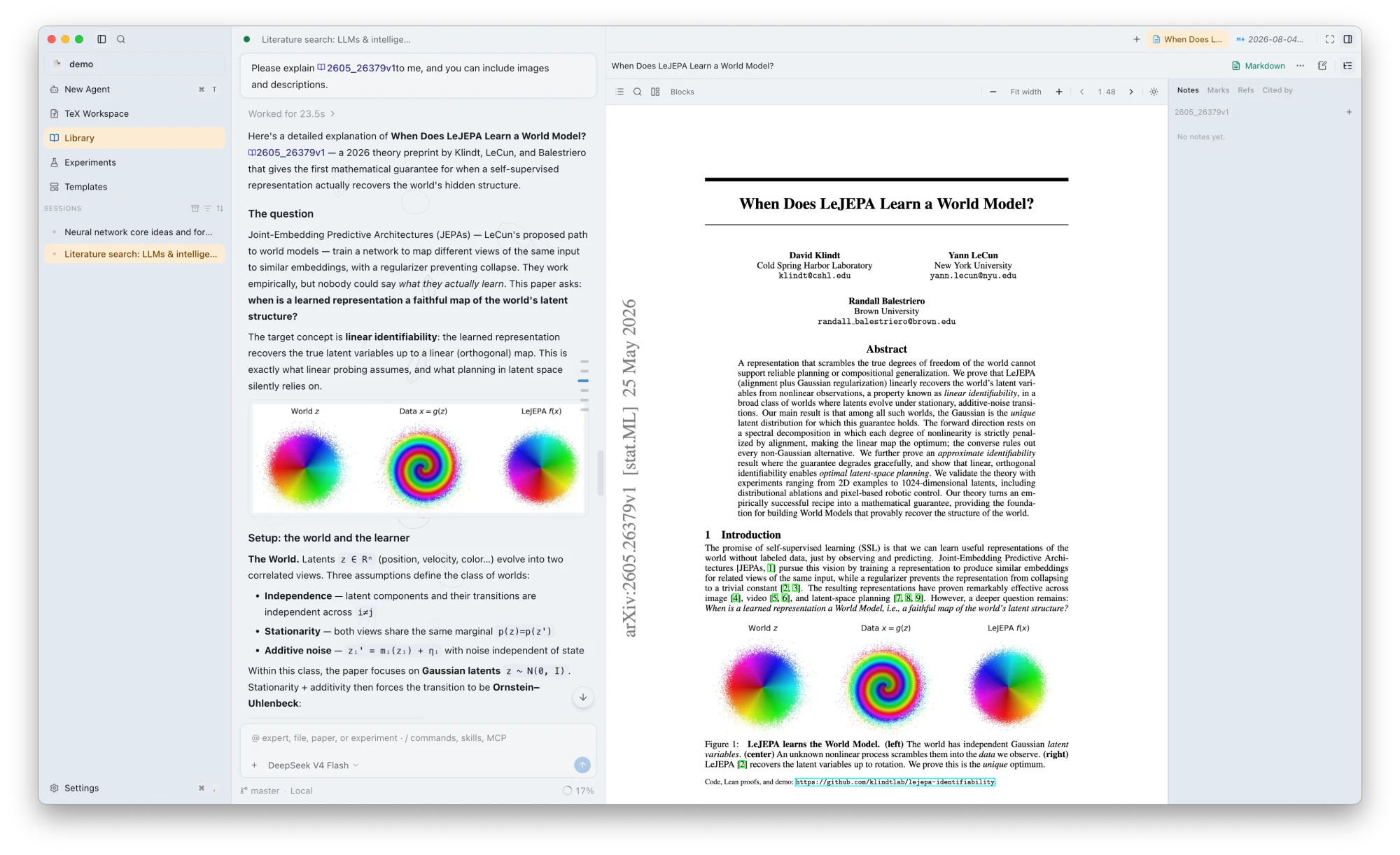
Reading with a co-pilot
The PDF sits on one side, the agent on the other. Ask about a section, a figure, or a claim — answers cite the page you are looking at.
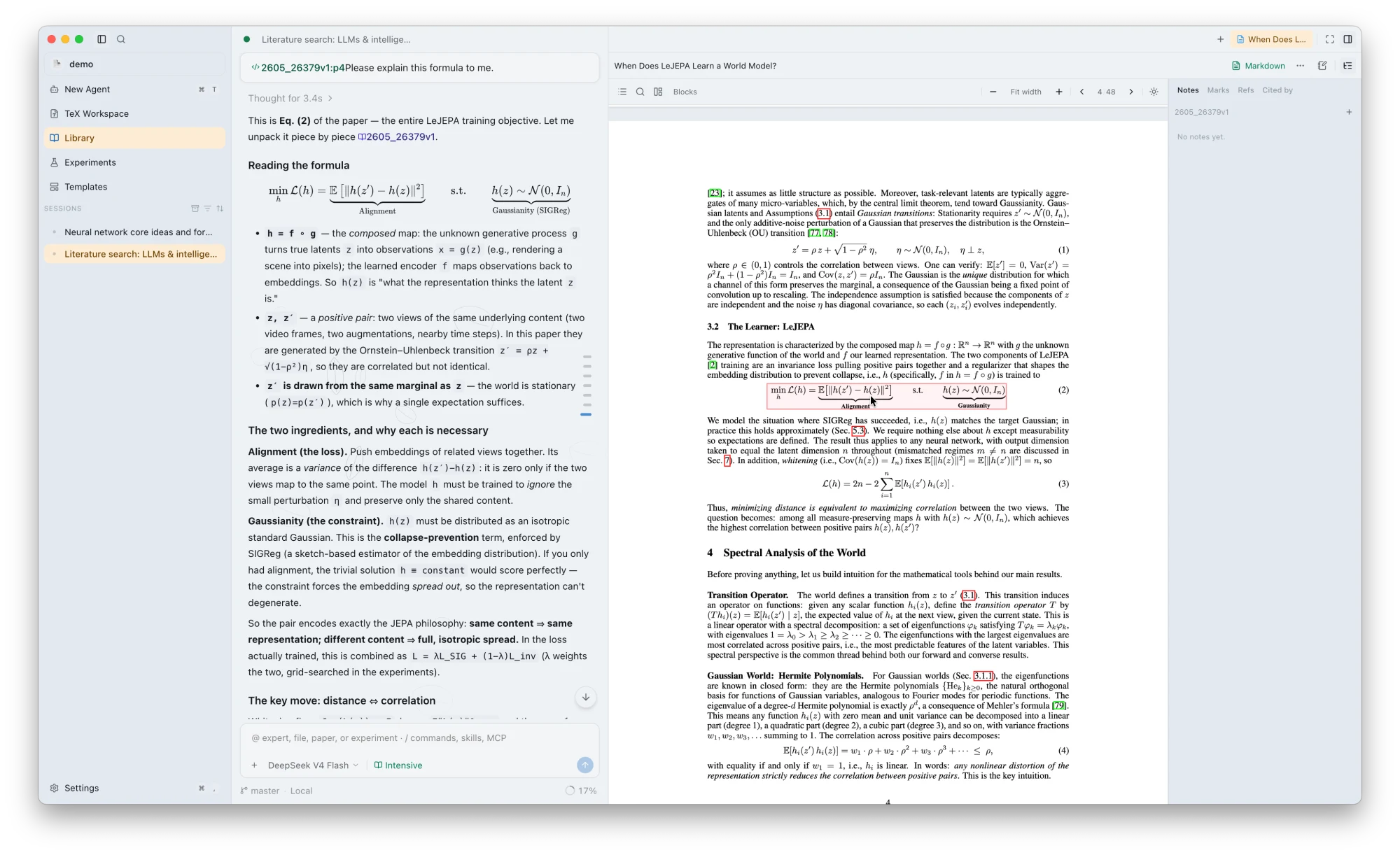
Intensive reading, line by line
Lasso a formula, a figure, or a paragraph and the agent walks through it step by step — notation unpacked, derivation explained, assumptions named.
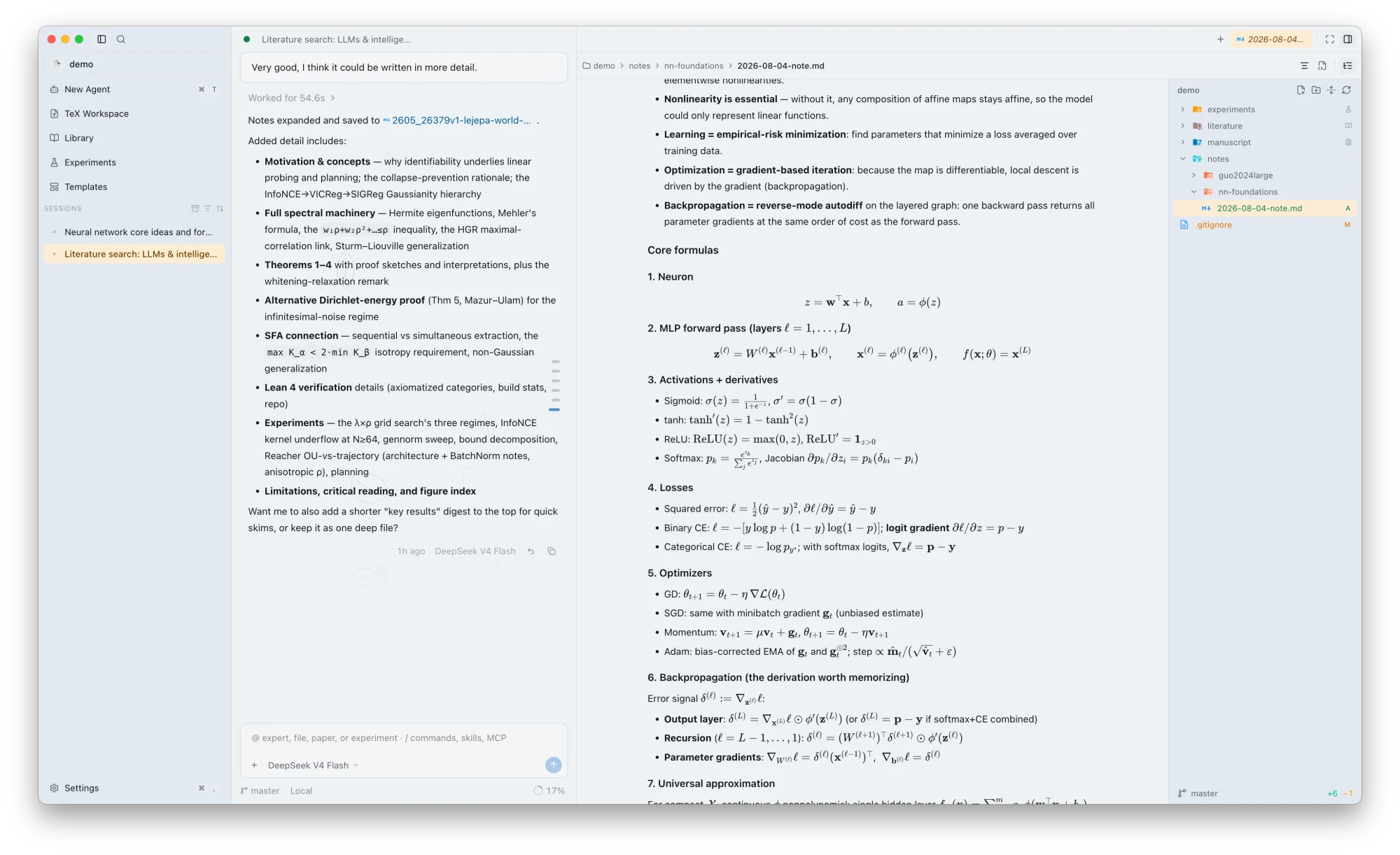
Notes that write back
Derivations, reading cards, and half-ideas live in project notes — and the agent works inside them: expanding, organizing, and cross-linking as you think.
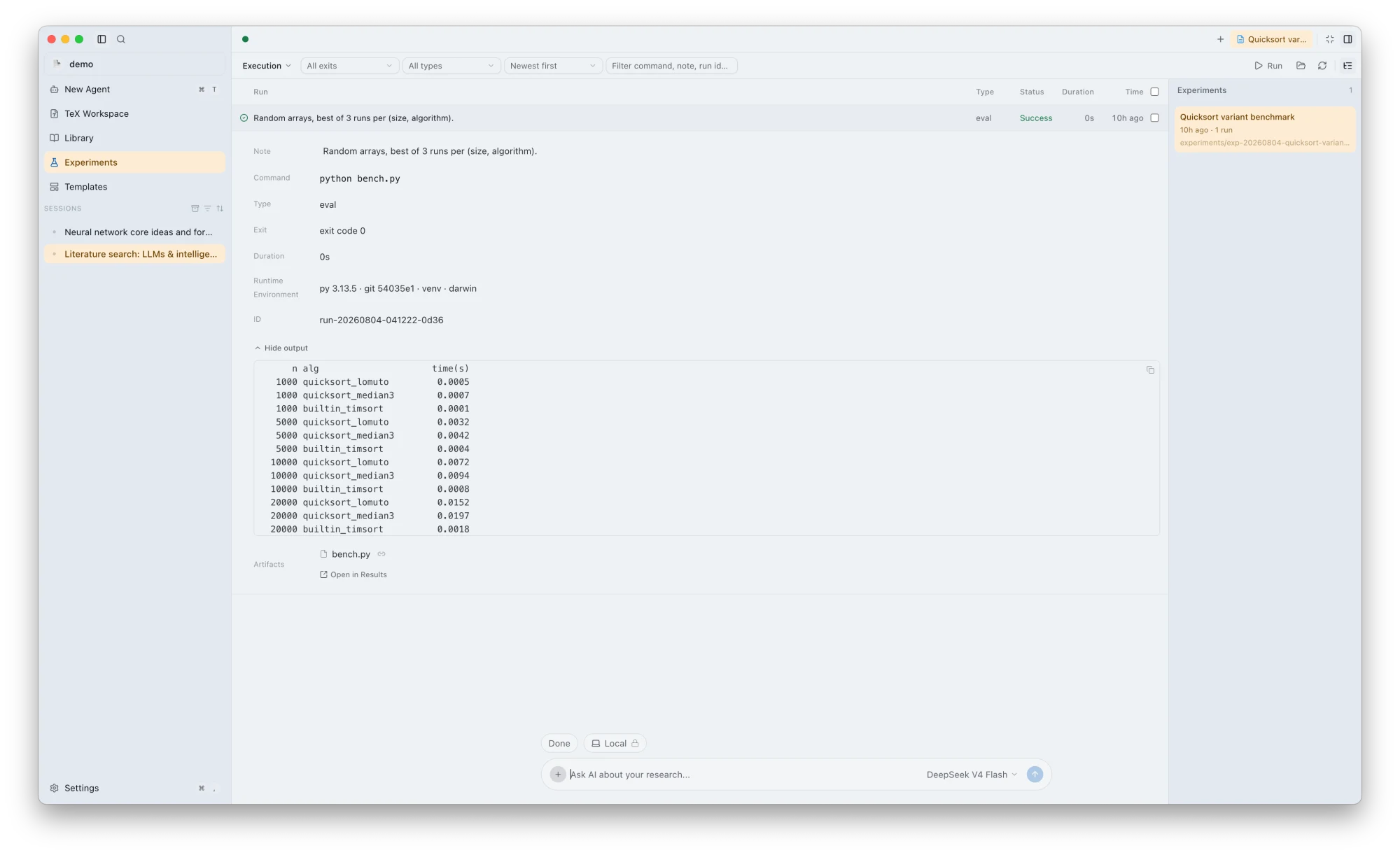
Experiments with provenance
The same agent writes the script, runs it gated, and files the receipt — command, exit code, runtime, run id, output, artifacts. Methods-grade traceability by default.
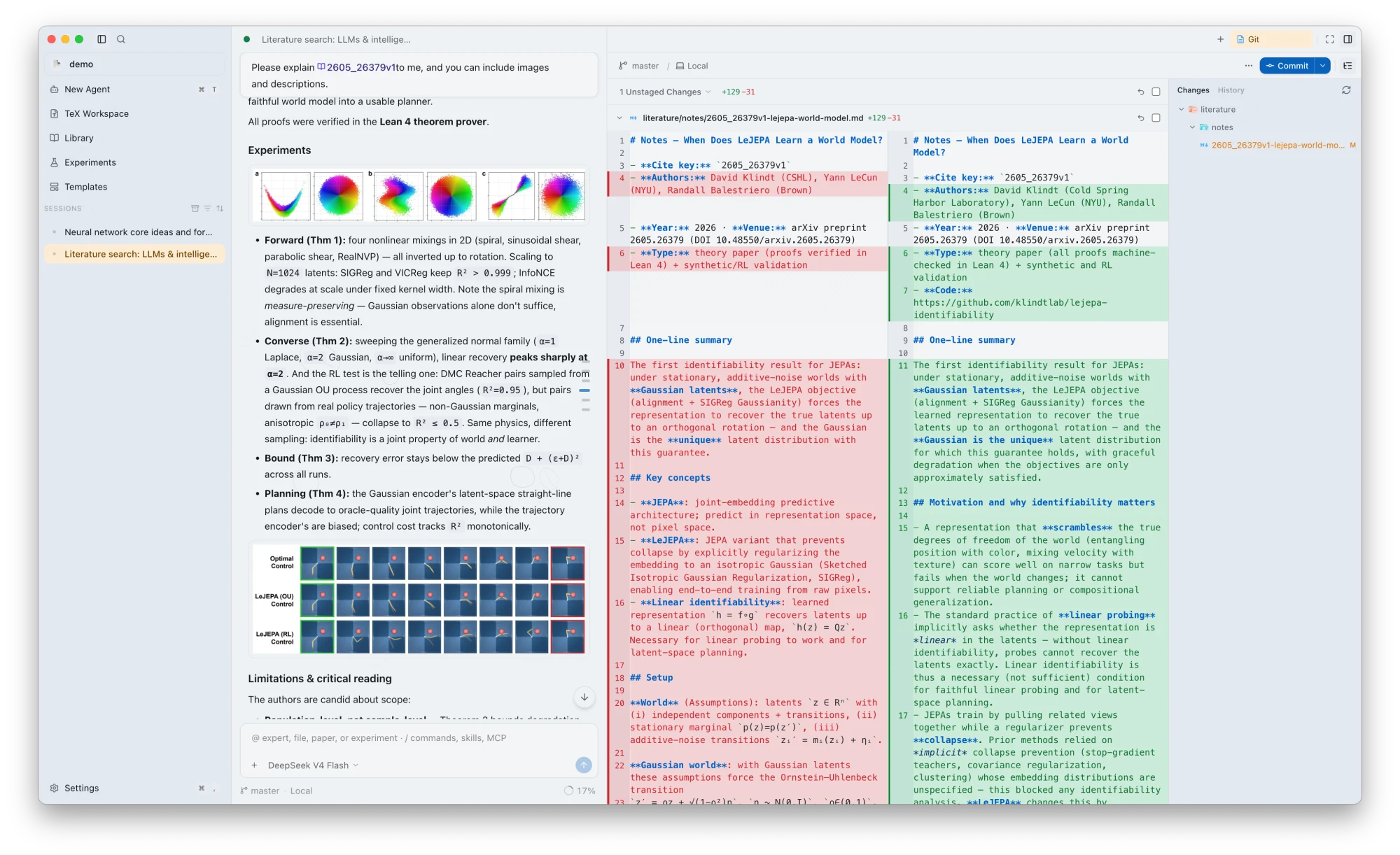
Git, built into the workspace
Every step — agent-written or yours — lands in git. Side-by-side diffs, commits, and reverts without leaving the desk; the whole research trail stays diffable.
First-class LaTeX writing
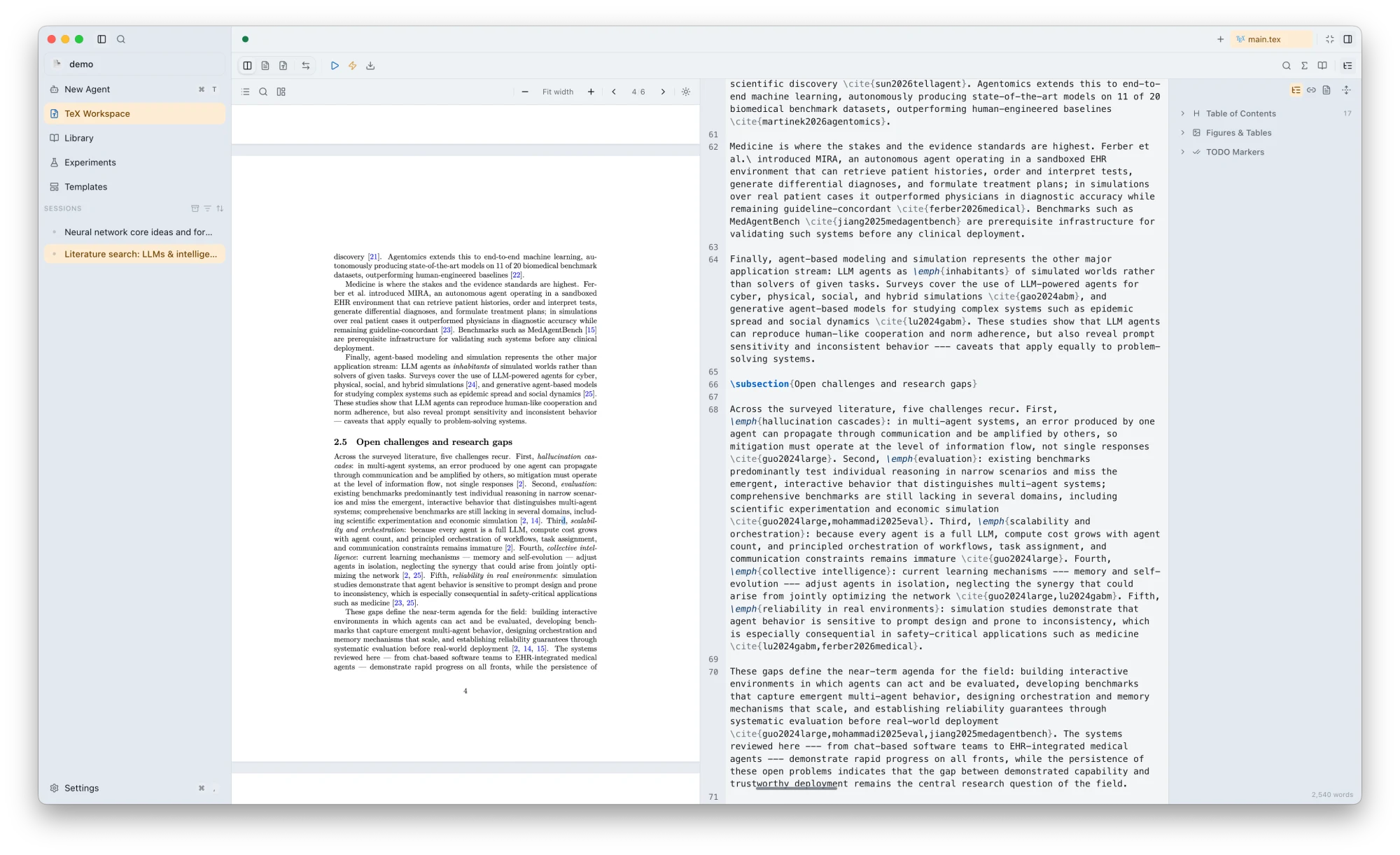
A real TeX workbench: source with an outline sidebar, live PDF preview, bundled Tectonic compile, and Proposed Changes review — serious manuscript editing, not a Markdown sidebar.
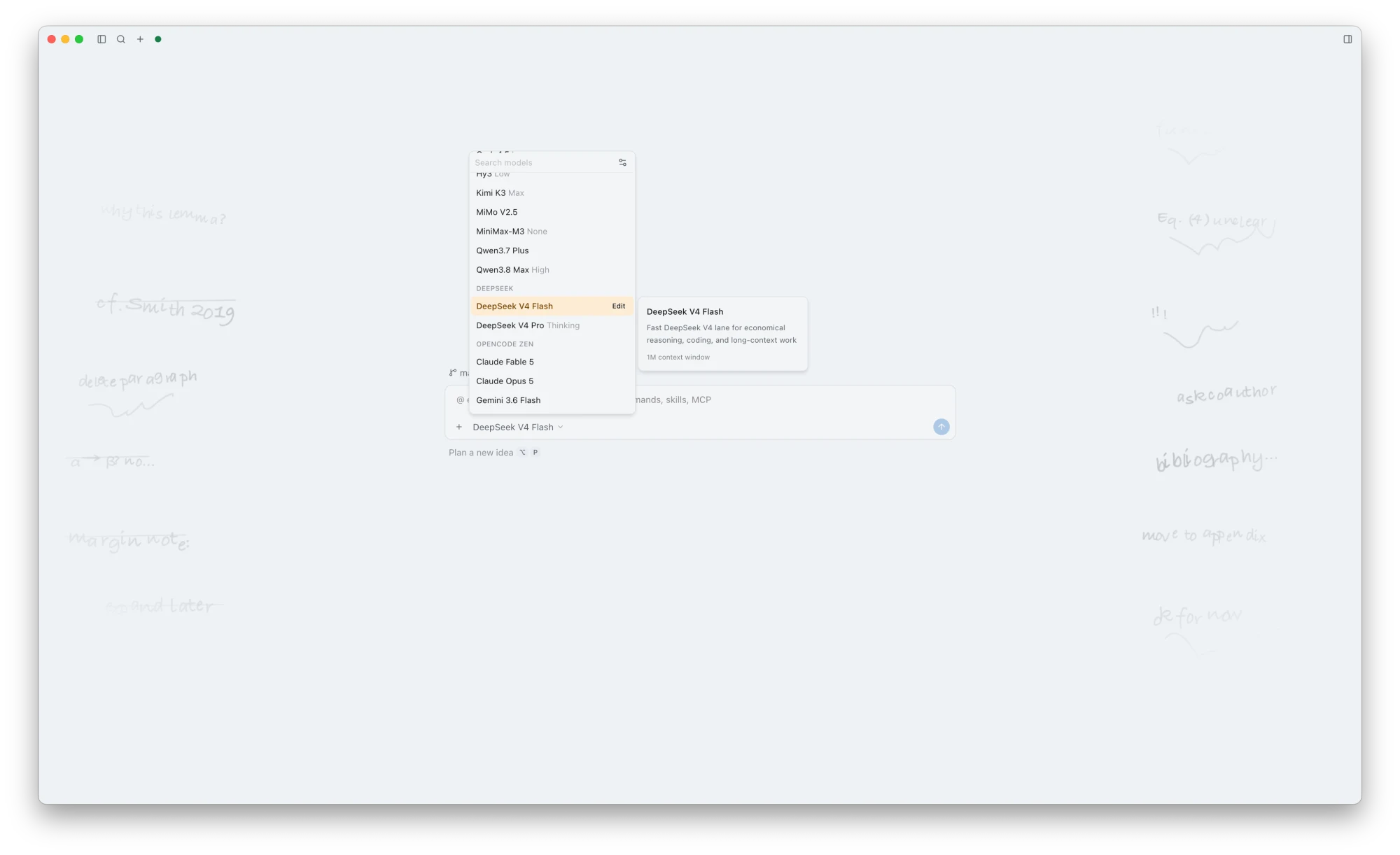
Every provider, your keys
DeepSeek, Claude, Gemini, GPT, Grok, Kimi, Qwen, MiMo, MiniMax — switch models mid-task, all on your own API keys. No Prism cloud, no middleman.
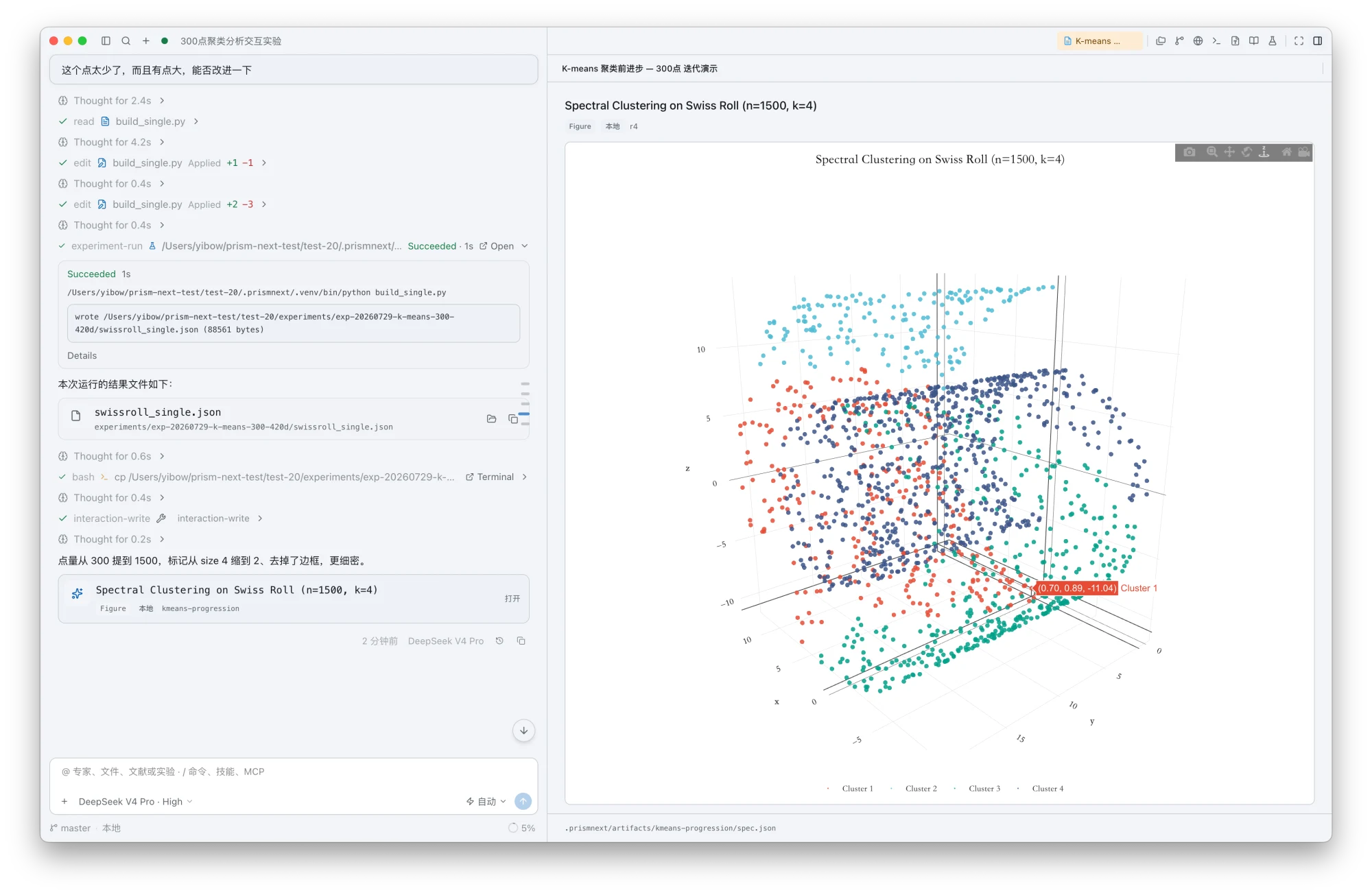
Interactive research, with a human gate
The agent proposes, you dispose: plans ask for consent, large moves come with auditable diffs, and permission modes decide how far autonomy goes — co-drive when you want control, full loop when you don't.
Research standards, codified
25 bundled skills the agent is held to — each with reference tables, templates, and runnable scripts. Always-on discipline lives in the prompt layer; skills load on demand. Open format: plug in community sources or distill your own from practice.
Ideate, design & run · 7
Idea labBrainstorm boldly — divergence before judgment, sparks filed in a dedicated ideas/ folder.Hypothesis designSharpen a question into testable hypotheses.Experiment design matrixFix the factorial / ablation matrix — and the compute budget — before running.ML experiment protocolMulti-seed discipline, fair baselines, aggregation script.Statistical rigorTest selection, effect sizes, runnable power analysis.Management & decision scienceDiD/IV/RDD, behavioral experiments, robustness battery.Experiment-to-MethodsRun records become Methods prose — no invented numbers.
Writing · 7
Writing designOutline gate before prose: story, sections, promise map.IntroductionProblem-driven, contribution-first, or story-arc — patterns, not molds.PreliminariesNotation tables, problem setup, symbol consistency.Methods chapterMotivation-driven structure; experiment receipts welcome.ResultsNumbers carry run ids; negative results reported.ConclusionCloses the Introduction's questions; honest limitations.Related workLibrary → synthesis narrative, grounded citations.
Figures · 4
Matplotlib figuresColorblind-safe matplotlib style + chart selection.TikZ & pgfplotsTikZ/pgfplots templates that compile out of the box.Figure pipelineData → figure → manuscript, end to end.Panel figuresRightArea figure & plot objects, conventions included.
Reading & review · 5
Intensive reading notesStructured deep-read notes from PDFs.PRISMA systematic reviewPRISMA 2020 protocol, screening log, flow counts.Critical reviewReverse-angle pass over manuscripts, claims, decisions — and itself.Manuscript preflightPass/fail gate before sharing: compile, citations, desk-reject.Rebuttal letterPoint-by-point reviewer rebuttal drafting.
Math & meta · 2
Symbolic mathSymPy-verified derivations, straight to LaTeX.Skill creatorDistill skills from workflows that just worked.
§3 Axioms
Axiom 1 (Locality). Your projects stay on your machine.
Axiom 2 (Privacy). No telemetry, no analytics — nothing leaves the machine.
Axiom 3 (Keys). Use your own model API keys.
Axiom 4 (Veto). Every automated move is gated and auditable; you keep the veto.